
Dr. Shirazian, O.D. uses a more precise, one-on-one approach to specialty lens fitting, helping many patients achieve comfortable, stable vision after struggling elsewhere.
Specialty Contact Lenses for Dry Eyes, Keratoconus, and Hard-to-Fit Eyes
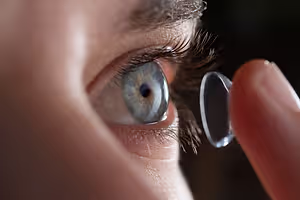
When Standard Contact Lenses Do Not Work
Many patients are told contact lenses are not a good option after experiencing discomfort, blurred vision, or lenses that never feel consistent. In many cases, these issues are related to how the lenses were fitted or whether the lens design matches the needs of your eyes.
Specialty contact lenses are designed for situations where standard lenses do not perform well. A more detailed eye evaluation allows us to determine what is possible for your eyes and select a solution that feels more natural and reliable.
Can You Wear Contact Lenses If They Did Not Work Before?
In many cases, yes.
Contact lens problems such as dryness, shifting, or inconsistent clarity often come down to fit and lens design. When these factors are evaluated properly, contact lenses can often become a comfortable and stable option again, even for patients who have stopped wearing them.


Specialty Contact Lenses for Dry Eyes and Sensitivity
Dryness is one of the most common reasons patients give up on contact lenses.
You may notice:
- Lenses feel comfortable at first, then dry out after a few hours
- Vision becomes inconsistent throughout the day
- Eyes feel irritated or tired with continued wear
Scleral lenses are often used in these cases. These lenses rest on the outer portion of the eye and create a fluid layer over the cornea, helping maintain moisture and reduce irritation.
Many patients with dry eyes are still good candidates for contact lenses when the right lens design is used.
Contact Lenses for Keratoconus and Irregular Corneas
Keratoconus and irregular corneal shapes can make vision difficult to correct with glasses or standard lenses.
You may experience:
- Distorted or fluctuating vision
- Difficulty achieving clarity with glasses
- Lenses that do not stay stable on the eye
Specialty lenses are designed to create a smoother optical surface, allowing light to focus more accurately. This improves clarity and stability, often providing better vision than traditional correction methods.

Contact Lenses for Hard-to-Fit Eyes
Some patients try multiple types of contact lenses without finding one that works.
This may include:
- Lenses that feel noticeable throughout the day
- Difficulty achieving a consistent fit
- Ongoing discomfort despite different lens types
These situations often require a more customized approach. Small adjustments in lens shape, size, and material can make a meaningful difference when evaluated carefully.
Contact Lenses for Keratoconus and Irregular Corneas
Keratoconus and irregular corneal shapes can make vision difficult to correct with glasses or standard lenses.
You may experience:
- Distorted or fluctuating vision
- Difficulty achieving clarity with glasses
- Lenses that do not stay stable on the eye
Specialty lenses are designed to create a smoother optical surface, allowing light to focus more accurately. This improves clarity and stability, often providing better vision than traditional correction methods.
Find the Right Contact Lens for Your Eyes
If contact lenses have not worked well in the past, a more precise approach from an experienced optometrist in Tarzana can often make a meaningful difference. The first step is to determine what is possible for your eyes and identify the right solution for long-term comfort and clarity.